Cottage cheese has gone from being a dairy product associated with 1980s diets to becoming one of the fastest-growing products in the international cheese industry. Driven by high-protein, clean-label, and wellness trends—and made viral on social media platforms like TikTok and Instagram—cottage cheese is no longer just a food: it’s a nutritional solution that today’s consumers are actively seeking out.
For any dairy manufacturer, this raises a strategic question: Why produce cottage cheese? What does its development entail, and what advantages does it offer compared to other product lines? In this article, we explore the market opportunity, the consumer profile driving it, and how a Fibosa cottage cheese production line enables manufacturers to produce it using advanced technology, hygienic design, and energy efficiency.
Why Should a Manufacturer Invest in Cottage Cheese?
The quintessential functional food
Today’s market demands more than just food—it demands nutritional solutions. Cottage cheese has positioned itself as one of the star products within the functional dairy category. We’re not just talking about a type of cheese, but a food that precisely meets the high-protein, clean-label, and wellness trends driving current demand.
An opportunity for the dairy industry
Adding cottage cheese to the product lineup isn’t just about following a passing trend—it’s about responding to a fundamental shift in consumer habits, with concrete benefits for manufacturers:
- A product in high demand with sustained growth in the European and international markets.
- It allows the product line to stand out and offers added value compared to more traditional dairy products.
- Adaptable to different market segments, from mass-market retail to channels specializing in sports nutrition.
- Production efficiency and process optimization when manufactured on a line specifically designed for this purpose.
- Directly addresses the needs of today’s consumers, who are increasingly well-informed and discerning about what they eat.
Development of This New Dairy Product: What Is Cottage Cheese?
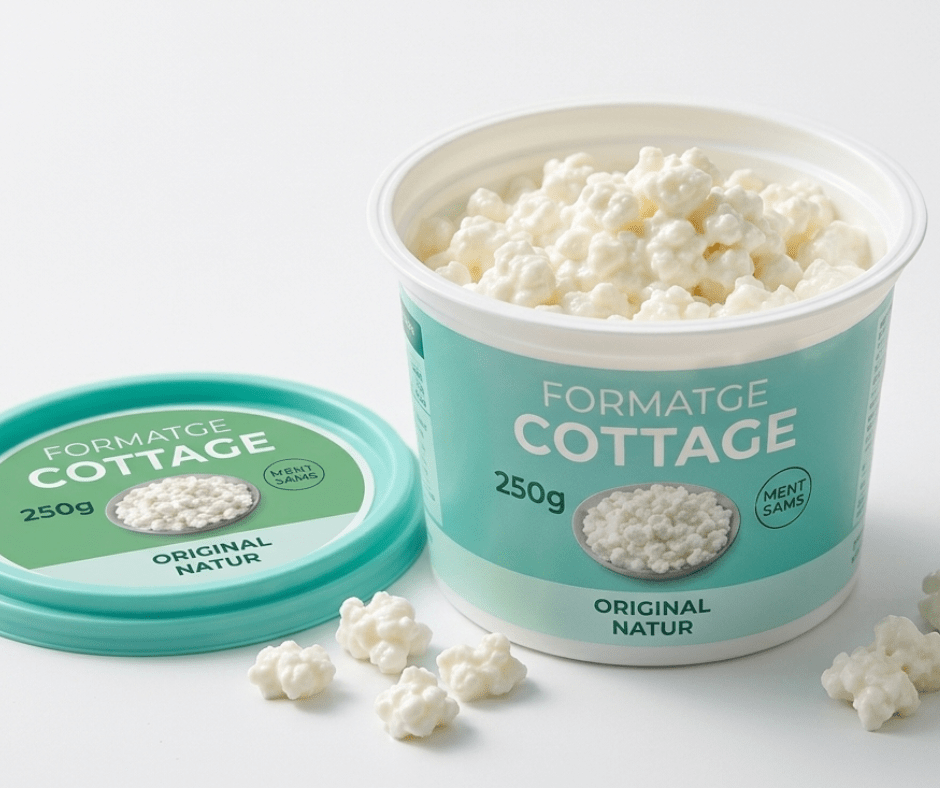
Cottage cheese is a fresh, fermented cheese characterized by its fine grain and creamy texture. Its high protein content, culinary versatility, and emerging consumer trends have made it a product with great potential within the dairy sector, capable of expanding any cheese shop’s product line without the need to reinvent its core technology.
The Nutritional Cornerstone: Complete, Slow-Digesting Protein
Cottage cheese is a source of complete, slow-digesting protein, with a nutritional profile that is highly appealing to today’s consumers. It is rich in casein, a protein particularly valued for contributing to muscle recovery and a longer-lasting feeling of fullness—all without the need for artificial additives. In a modern diet, cottage cheese is an ideal choice for those seeking balance, energy, and naturalness in a single product.
Nutritional Properties
- High in protein, with a significant amount of casein.
- Smooth and creamy texture, highly valued in both sweet and savory applications.
- Fresh product, requiring no prolonged ripening processes.
- Suitable for a balanced diet, in line with current nutritional recommendations.
Benefits of Making Cottage Cheese
Versatility in consumption and adaptation to the market
- Highly versatile—suitable for both sweet and savory recipes.
- A product aligned with healthy and high-proteinconsumer trends.
- Appeals to a wide range of consumer profiles, from athletes to foodies.
- Available in various formats and packaging options, adaptable to each sales channel.
This versatility is, in large part, what explains its move from the health food aisle to the center of the general grocery aisle: Cottage is no longer seen as a niche product, but rather as an everyday ingredient that works just as well for breakfast as it does for a savory dish.
The Current Target Audience for Cottage Cheese
Today’s cottage cheese consumer is primarily defined as a young, urban person who is very health-conscious and focused on nutrition and physical performance. Following a historic sales boom driven largely by social media platforms like TikTok and Instagram, this dairy product has evolved from being perceived as a “boring diet food” of the 1980s to becoming a trendy and highly versatile culinary ingredient.
Today’s consumers can be grouped into three main profiles:
- Gen Z and Millennials foodies(ages 18–40): They’re leading the trend. They actively search for recipes online and consume the product not only for health reasons, but also for novelty and visual appeal in the kitchen.
- Fitness community and athletes: users focused on maximizing muscle mass, recovery, and satiety. They appreciate that a single serving provides about 14 grams of high-quality protein —mainly casein—per 100 grams of product, while also being very low in fat and calories.
- “Clean label” consumers (clean label) consumers: people who reject ultra-processed foods. Cottage cheese appeals to this segment because it is made with very few basic ingredients: milk, cultures, rennet, and salt.
These three profiles are not mutually exclusive and often overlap in the same consumer: someone who starts buying cottage cheese because of a recipe they saw on social media usually sticks with it because of its protein content and the simplicity of its ingredients.
Fibosa Solutions for Cottage Cheese Production
At Fibosa, we offer equipment and complete production lines for cottage cheese, featuring advanced technology, hygienic design, and energy efficiency. We support our customers at every stage of the project to ensure quality, performance, and reliability.
Are you interested in adding cottage cheese to your product lineup? Contact Fibosa and we’ll advise you on the best product line to meet your production needs.