Pressed, closed-textured cheeses are one of the highest-volume segments in global industrial cheese production. Gouda, Edam, and Maasdam account for a large portion of that demand: three varieties of Dutch origin that share the same production technology but differ in composition, starter cultures, and ripening process.
Understanding these differences is key for any cheese maker that wants to produce them with technical precision. In this article, we analyze what defines them, how they differ, and how a specialized production line—such as Fibosa’s pressed cheese line—enables them to be produced with precision and efficiency.
What is a pressed, closed-textured cheese?
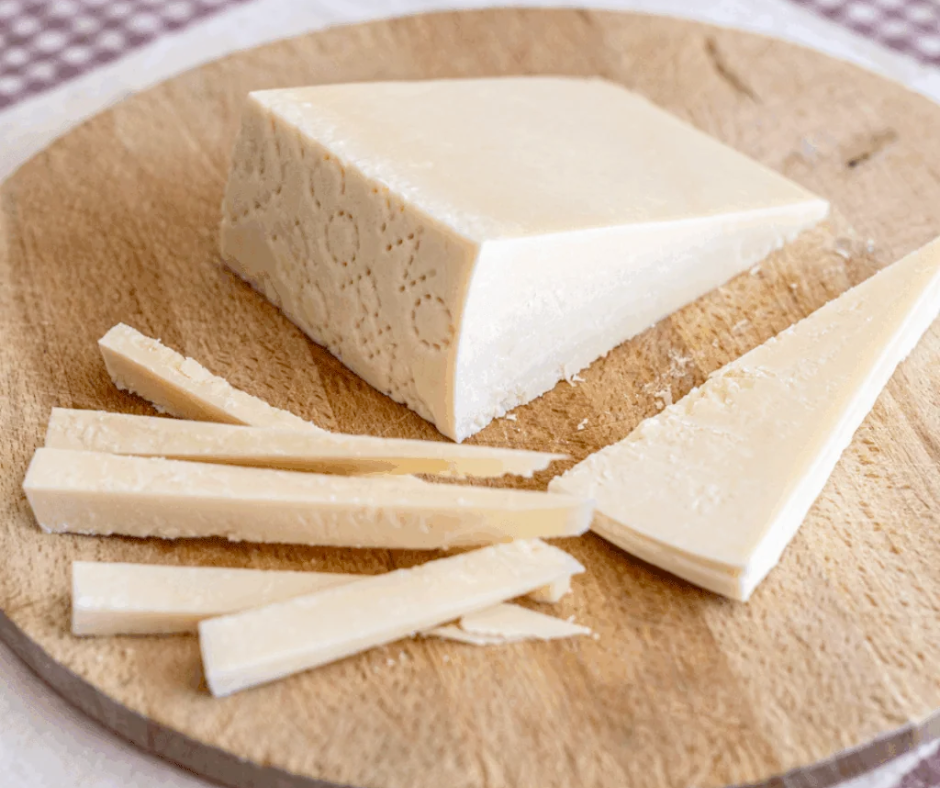
When we talk about pressed, closed-textured cheeses, we are referring to cheeses whose interior is compact, with no visible cavities. A notable exception is the biologically (propionic) derived holes found in cheeses such as Maasdam, the formation of which is a defining characteristic of this type of cheese, not an anomaly. This homogeneous structure is the direct result of the pressing process: applying pressure to the curd uniformly expels the whey and seals the paste, creating a firm, continuous texture.
The difference is visible when the cheese is cut. An open-textured cheese—such as Manchego—features irregular, naturally distributed holes, known as mechanically formed holes: cavities that form during molding and fermentation, without precise control over their number or arrangement. A closed-textured cheese, on the other hand, is the result of a pressing process that ensures a homogeneous internal structure, free of unwanted cavities.
This distinction is not merely aesthetic: the closed-cell structure offers clear advantages in terms of shelf life, cutting, mouthfeel, and behavior during melting.
Advantages of pressing for achieving a homogeneous structure
- Complete control over texture: pressing uniformly removes residual whey, preventing pockets of moisture that could compromise quality.
- Longer service life: A cavity-free paste is less susceptible to internal contamination.
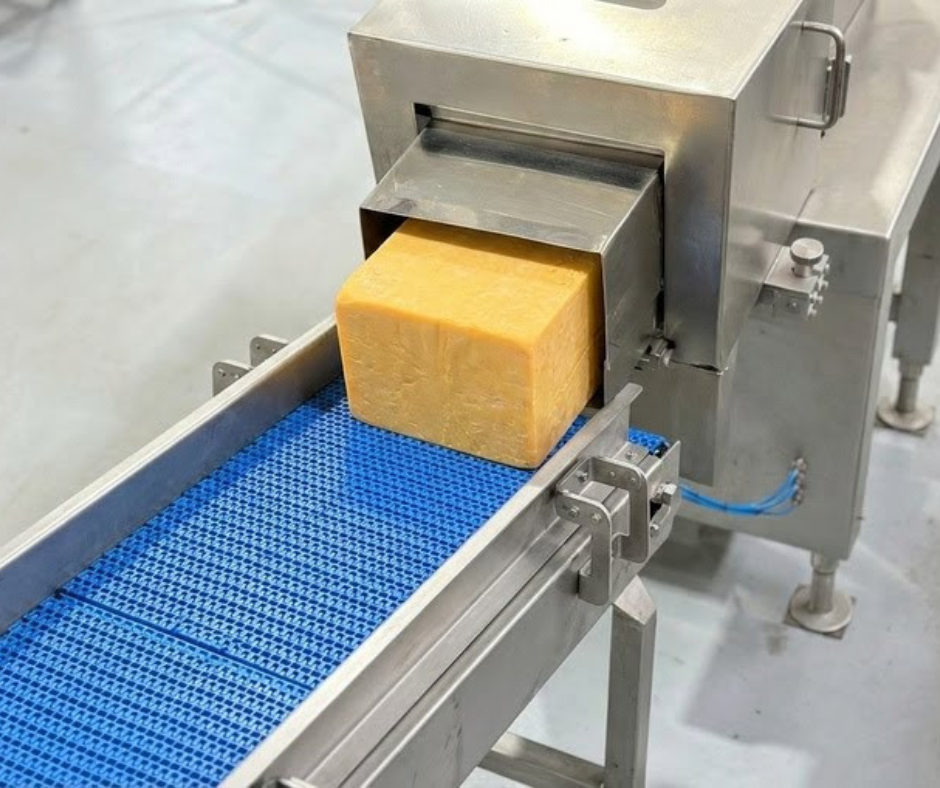
- A clean, even cut: essential for both fresh consumption and the food processing industry.
- Predictable melting: key for industrial applications such as pizzas, sauces, and dairy products.
The Importance of These Cheeses in the Dairy Industry
Pressed, closed-textured cheeses account for a substantial portion of global cheese production. Their approachable sensory profile—mild flavor, versatile texture, and good meltability—makes them high-turnover products in both the consumer market and the foodservice and food industry sectors.
The Netherlands is, historically, the birthplace of this style. Gouda, Edam, and Maasdam are internationally recognized geographical designations and absolute benchmarks in European cheese-making. Their success in the export market has led to their recipes being replicated in cheese shops around the world, which has driven demand for specialized equipment capable of reproducing their processes with technical precision.
Key Characteristics of Closed-Paste Pressed Cheeses
Beyond their individual differences, Gouda, Edam, and Maasdam share a technical and sensory profile that groups them under the same category:
- Medium-hard texture: neither too soft nor too hard, making it easy to cut by hand or using industrial methods.
- Clean, even cut: no fraying or irregularities, ideal for slicing and portioning.
- Good melting properties: they melt evenly, without the fat separating.
- Light yellow or golden color: resulting from the natural composition of milk and, in some cases, from the use of natural coloring agents such as annatto.
- Mild flavor in the young varieties: accessible to a wide audience, with the potential to develop further depending on the aging period.
Similarities Between Gouda, Edam, and Maasdam
Before delving into their differences, it is worth acknowledging what unites them:
- Dutch origin: All three are cheeses with a long history in the Netherlands, linked to specific regions and cheese-making traditions.
- Milk-based: They are mainly made with cow’s milk, although there are artisanal versions made with other types of milk.
- Semi-hard classification: Their moisture content and the pressing process place them in the same technological category.
- Pressed pasta: Molding is a common step in its production and is crucial to its final texture.
- Easy to slice and long shelf life: characteristics that make them attractive for distribution and retail.
- Mild flavors in the early stages of aging: milky and buttery aromas that are pleasant and accessible to most consumers.
Differences Between Gouda, Edam, and Maasdam
It is in the details that each cheese reveals its personality.
Gouda
The best known and most widely consumed of the three worldwide. It is characterized by:
- It has a creamy texture thanks to its higher fat content.
- A wide range of aging periods: from young Gouda (4–6 weeks) to aged Gouda (more than 12 months), with noticeable differences in flavor and texture.
- An evolving flavor: smooth and milky in young versions; complex, with notes of caramel and tyrosine crystals, in very aged versions.
- Natural or waxed bark, usually yellow or red in color.
Edam
Lighter than Gouda, with a distinct nutritional profile:
- Lower fat content: It is made with semi-skimmed milk, which reduces its fat content compared to Gouda.
- Firmer texture: a direct result of its lower fat content.
- Delicate, slightly salty flavor: less intense than Gouda, even in aged varieties.
- Excellent shelf life: its low moisture and fat content make it particularly stable.
- It is recognizable by its red paraffin coating on export pieces, although it is also available in yellow.
Maasdam
The youngest of the three in terms of its designation—it was created in 1984 as a Dutch alternative to Swiss Emmental—and the one with the most distinctive character:
- A sweet, fruity flavor with distinct notes of nuts.
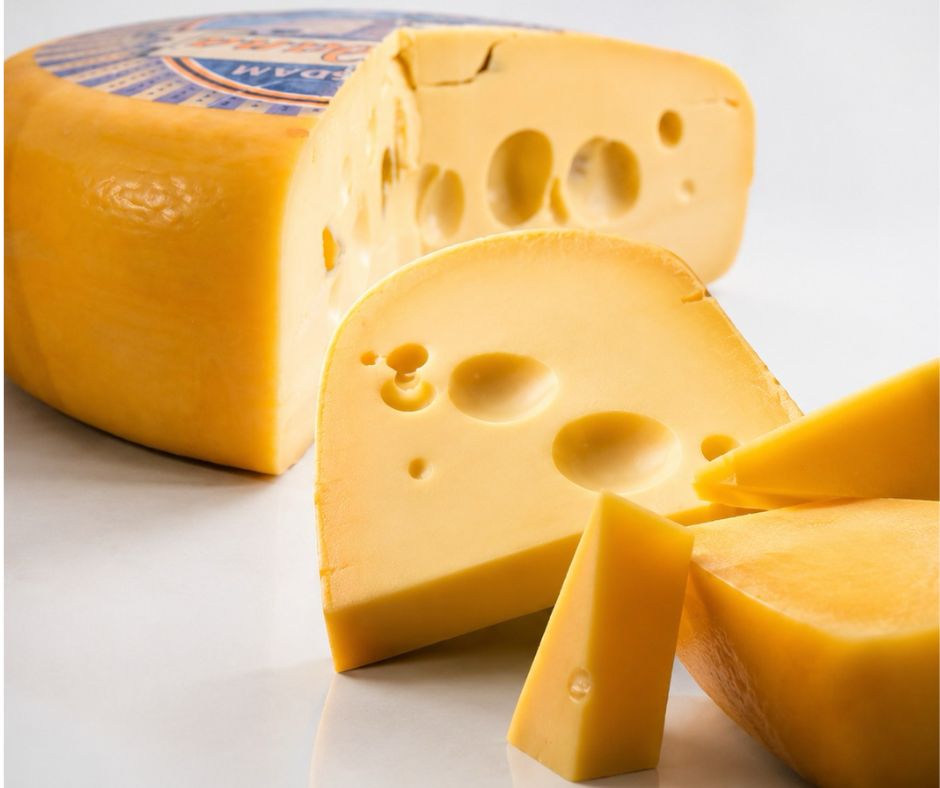
- The presence of large holes distributed evenly throughout the dough: its most distinctive visual feature.
- Inspired by Emmental-style cheeses: it uses the same propionic ripening technology, adapted to Dutch production standards.
- It matures more quickly than traditional Emmental: usually between 4 and 12 weeks.
The yeast in each recipe: the key to standing out
If there is one factor that determines the differences between these three cheeses—aside from the milk’s fat content—it is the starter cultures or ferments used in each recipe.
Cultures for Gouda and Edam
Both are made using mesophilic lactic acid cultures, primarily bacteria of the genus Lactococcus. Their function is:
- To produce lactic acid in a controlled manner during coagulation and whey removal.
- Develop the precursors of characteristic flavor and aroma.
- Contribute to the final texture by gradually acidifying the dough.
The absence of propionic bacteria in the basic recipe for Gouda and Edam explains why their cheese has a dense, homogeneous texture, without the formation of large holes.
Cultures for Maasdam
The key difference in Maasdam lies in its microbial composition: in addition to the usual mesophilic lactic acid cultures, it contains propionic bacteria (Propionibacterium freudenreichii and related species). These bacteria are directly responsible for:
- Carbon dioxide (CO₂) production during ripening.
- The formation of the large holes that are the visual hallmark of the cheese.
- The development of a sweet, fruity flavor, resulting from propionic acid and other metabolites produced during its activity.
The Importance of Fermentation in the Final Result
Fermentation is not a secondary step: it is the driving force that defines the cheese’s flavor, texture, and structure. Precise control of temperature, time, and the selection of cultures determines whether the final product meets the desired sensory profile. For this reason, in industrial production, traceability and consistency in the dosing of starter cultures are critical factors for quality.
What Makes the Maasdam Unique: The Hot Chamber
If there is one step that radically distinguishes the production of Maasdam from that of Gouda and Edam, it is the ripening phase in a heated chamber.
The Formation of Holes: A Controlled Process
The “eyes” of the Maasdam are not defects: they are the result of a meticulously designed process.
- Initial fermentation: During production, the master cheesemaker adds propionic acid bacteria cultures to the milk along with the usual lactic acid bacteria. These bacteria remain dormant in the freshly pressed cheese curd.
- Start of aging: Once removed from the mold and salted, the cheese begins to age in a cold room (between 10 and 13 °C), where the rind forms and the cheese develops its initial structure.
- The warming chamber: the key to the process. The cheese is transferred to a chamber at approximately 20–25 °C for several weeks. At this temperature, propionic bacteria become active and begin to metabolize the lactic acid produced by mesophilic cultures.
- CO₂ Release: As a byproduct of this metabolic process, propionic bacteria release carbon dioxide. Since the Maasdam cheese curd is semi-soft at this stage, the gas cannot escape to the outside and accumulates inside the curd.
- Cavity formation: The trapped CO₂ forms bubbles that, over time, develop into the round, shiny, and uniform cavities we see when we cut the cheese. This process can take between 3 and 6 weeks in a heated chamber.
- Final ripening: After the hot phase, the cheese is returned to a lower, controlled temperature to complete its ripening and stabilize its texture and flavor.
This hot-room stage does not exist in the production of Gouda and Edam, which are aged entirely in cold rooms or at a controlled ambient temperature, without the activation of propionic bacteria.
Production line for pressed, closed-textured cheeses
Producing cheeses such as Gouda, Edam, or Maasdam on an industrial scale requires equipment designed to ensure precision, hygiene, and consistency in every batch. Fibosa’s closed-paste pressed cheese production line integrates every stage of the process with specialized machinery for producing Maasdam cheese and other closed-paste varieties:
1. Receiving the curd in the vat
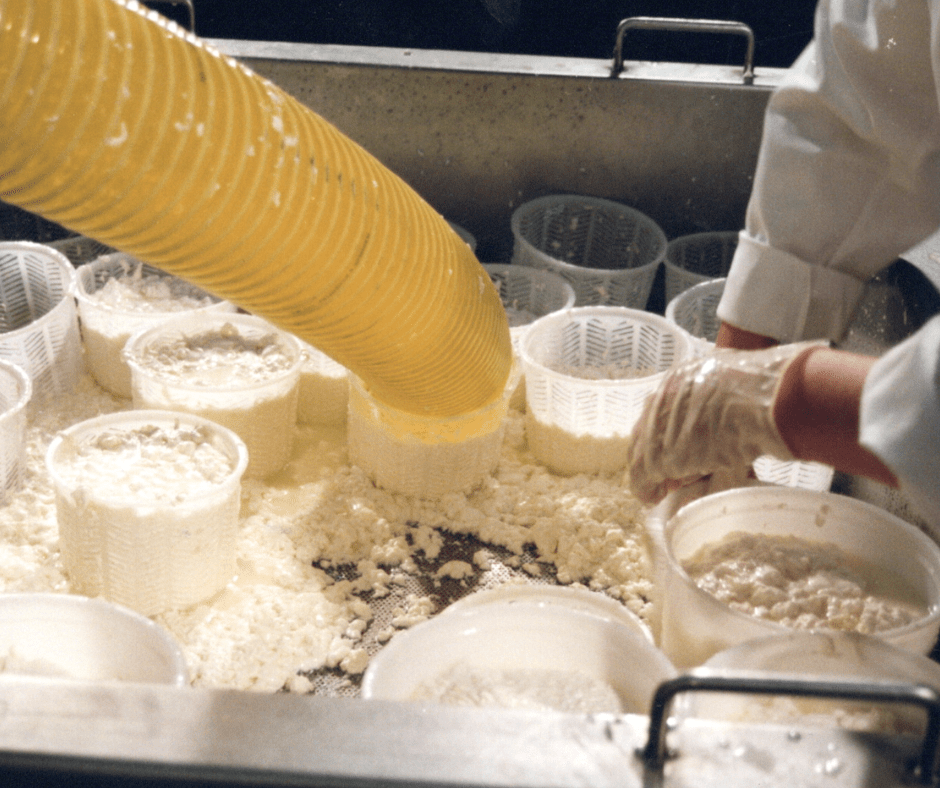
The curd produced during the coagulation process is transferred to the processing vat, where the temperature is controlled and the curd is cut and drained prior to molding.
2. Fibosa Universal Dosing Machine
The Fibosa Universal Filling Machine is the heart of the production line. It distributes the curd precisely and evenly into the molds, ensuring uniform filling—which is the foundation of a high-quality, tightly sealed cheese. Its design allows it to work with different mold sizes and adapt to various recipes without requiring structural changes to the production line. You can view its technical specifications and available models in the product sheet for the Dosimatic Universal cheese dosing machine.
3. Molding
The curd is placed into molds of the appropriate shape and size for each variety. The mold determines the final shape of the cheese and influences the distribution of pressure during pressing.
4. Pressing
Pressing is the critical step in producing a firm cheese. The pressure applied—gradually and in a controlled manner—expels the residual whey and seals the internal structure of the curd, creating the compact and uniform texture characteristic of these cheeses.
5. Cap Remover
Once the pressing process is complete, the cap remover automatically removes the top and bottom caps from the mold, facilitating the flow of the production line without manual intervention.
6. Turner
The turner rotates the cheese inside the mold during pressing to ensure even pressure distribution and prevent asymmetries in the cheese.
7. Release Agent
The demolding machine automatically and carefully removes the cheese from the mold, preserving the integrity of the cheese and preparing it for the next steps.
8. Salting House
The cheese is immersed in brine for the amount of time specified in the recipe. Salting affects the flavor, rind, and shelf life of the product.
9. Maturation
The cheese is transferred to a ripening chamber under controlled temperature and humidity conditions. In the case of Maasdam, this stage includes the specific phase in the heated chamber described above.
Conclusion
Gouda, Edam, and Maasdam share the same origins, production methods, and an approachable flavor profile that has made them global benchmarks in the cheese industry. However, their differences—in fat content, the cultures used, and the ripening process—make them unique products with their own distinct character.
Maasdam is particularly notable for its ripening phase in a heated chamber at 20–25 °C, without which its characteristic holes and sweet, fruity flavor would not be possible. This phase, which is absent from the production of Gouda and Edam, perfectly illustrates how small decisions in the process can completely transform the end result.
For manufacturers looking to produce any of these varieties with efficiency, consistency, and industrial-grade quality, Fibosa’s line of closed-paste pressed cheeses offers the necessary technological solution: from precise dosing with the Fibosa Universal Dosing Machine to automated demolding, each stage is designed to ensure top-quality closed-paste cheese, batch after batch.
Would you like to learn more about our line of pressed cheeses? Contact Fibosa and we’ll help you find the best solution.