The continuous salting process for fresh cheese is one of the most decisive stages in the industrial processing of soft cheeses. The texture, conservation, humidity and uniformity of the final product depend on it.
Unlike traditional brine salting, the continuous process uses dry salt applied in an automated manner, resulting in faster results, improved hygiene and more efficient use of resources.
Preparation of the cheese before salting
The process begins once the molding phases have been completed. The cheeses are transferred on ripening racks, without manual handling, guaranteeing traceability and hygiene.
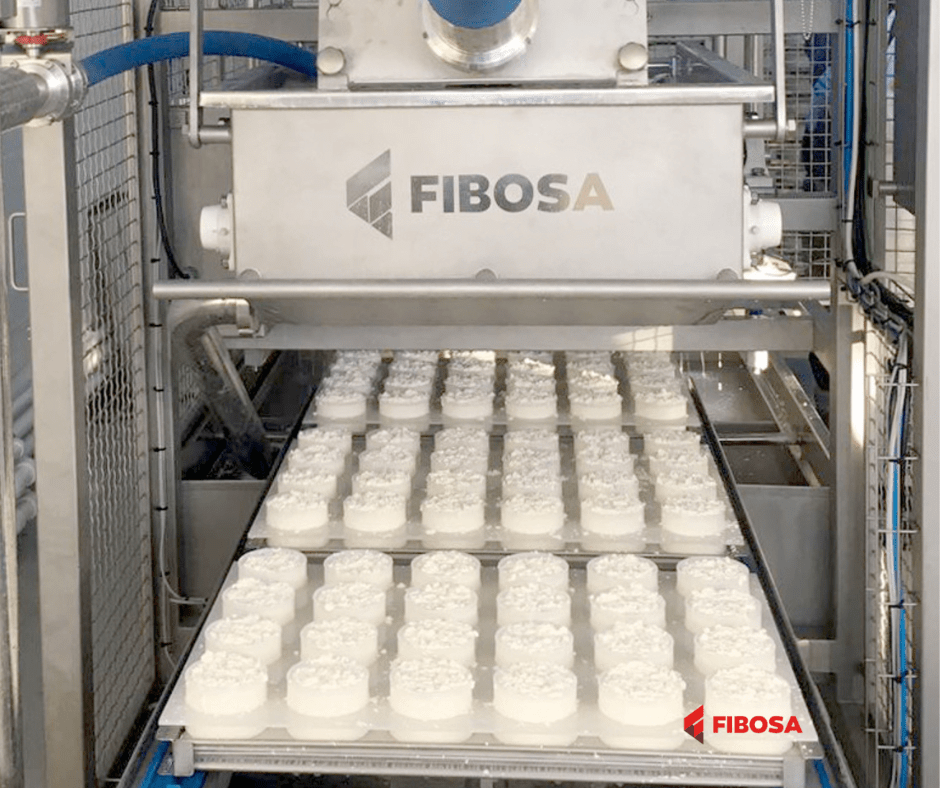
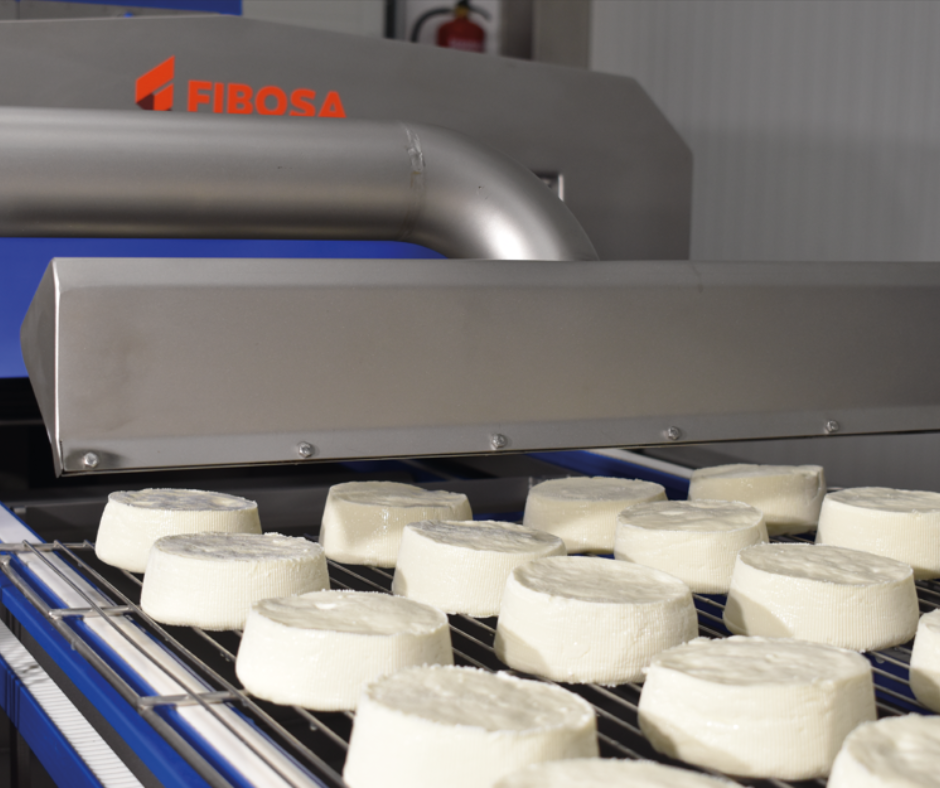
In the salting tunnel, a salt curtain covers the surface of the cheese while a system of air nozzles applies salt through the base. The result: complete and controlled coverage.
During the short resting period, the salt naturally penetrates the interior of the cheese, balancing the moisture and improving its texture without altering its freshness.
2. Top application: salt “curtain
The first salting phase is carried out by means of a curtain of salt that falls gently from the top, covering the entire surface of the cheese.
This system automatically adjusts the amount and flow of salt according to the size and type of cheese, allowing a uniform and constant dosage.
This avoids both over-salinization and areas with low coverage, guaranteeing homogeneous quality throughout the production.
3. Bottom application by means of air nozzles
In parallel, a system of air nozzles distributes salt from the lower part of the cheese, which propels the salt grains towards the base of the cheese, allowing a complete and balanced coverage.
This double application – top and bottom – ensures that each piece is salted identically, optimizing the diffusion of the salt inside during the following hours.
4. Rest and absorption phase
After application, the cheeses remain on the grids for a short resting period to allow the salt to penetrate the mass.
During this stage, a natural osmotic equilibrium is generated: the salt extracts part of the excess surface moisture and is distributed evenly throughout the cheese.
The result is a firmer texture, a stable structure and perfectly controlled humidity, without altering the cheese’s own freshness.
5. Control of process parameters
The success of continuous salting depends on the precise control of several technical parameters:
- Salt grain size, which influences the rate of dissolution and penetration.
- Exposure time, adjusted according to the format and weight of the cheese.
- Air flow, which regulates the quantity and distribution of salt.
- Ambient temperature and humidity, which determine water absorption and loss.
6. Effects of salting on fresh cheese
The salting process not only adds flavor, but also directly influences the structure, safety and presentation of the cheese.
- Balanced flavor that enhances lactic notes and reduces acidity.
- Firm and uniform texture, which facilitates cutting and handling.
- Improved preservation by inhibiting microbial growth.
- Homogeneous surface, with lower humidity and better visual appearance.
Thanks to the continuity and control of the process, these effects remain constant throughout production, ensuring quality.
7. Advantages of continuous salting vs. brine salting
| Appearance | Continuous salting | Traditional salted |
| Salting medium | Controlled dry salt | Brine bath |
| Process time | Seconds | minutes or hours |
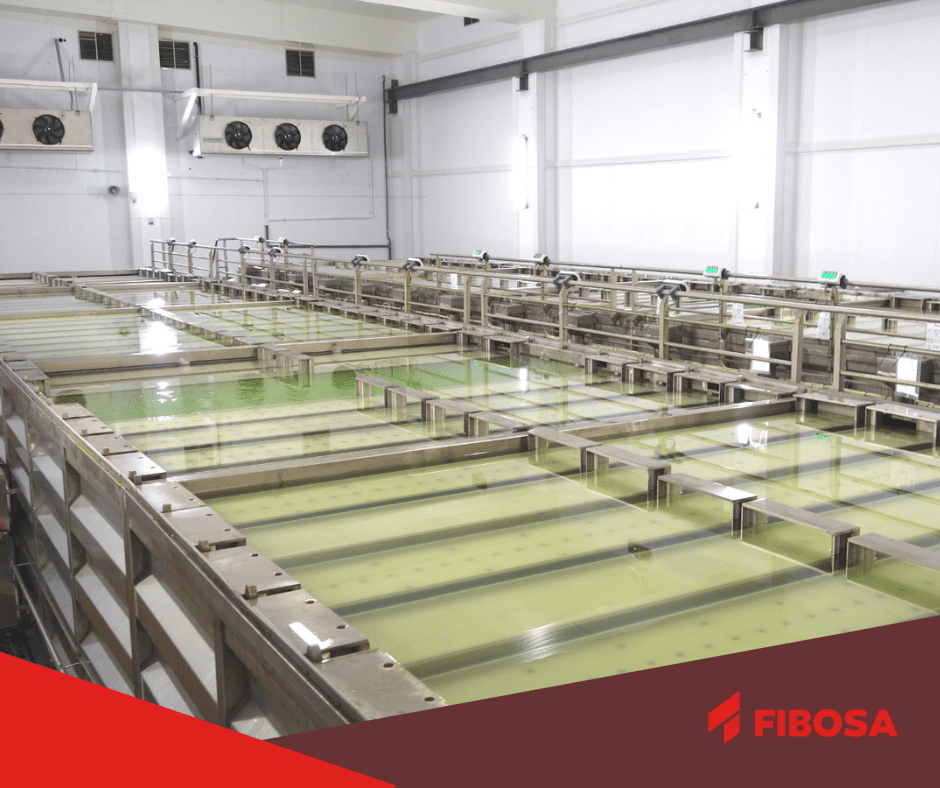
| Environmental impact (after consumption) | 0% water consumption | water consumption / water with brine waste, not reusable |
| Hygiene | No contact with liquids or operators | Increased risk of contamination |
| Consumption | Low salt and energy use | High brine and refrigeration consumption |
Continuous salting eliminates the disadvantages of brines – such as high energy consumption, corrosion or frequent cleaning – and provides a more sustainable alternative.
Applications in the fresh cheese industry
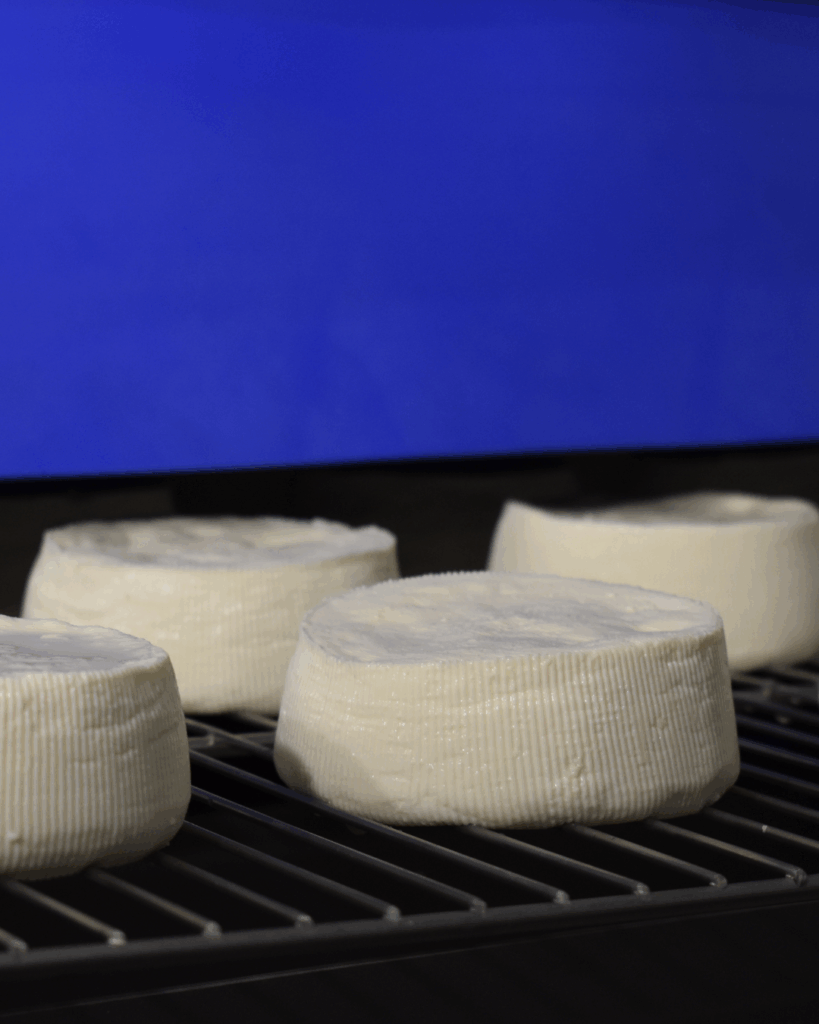
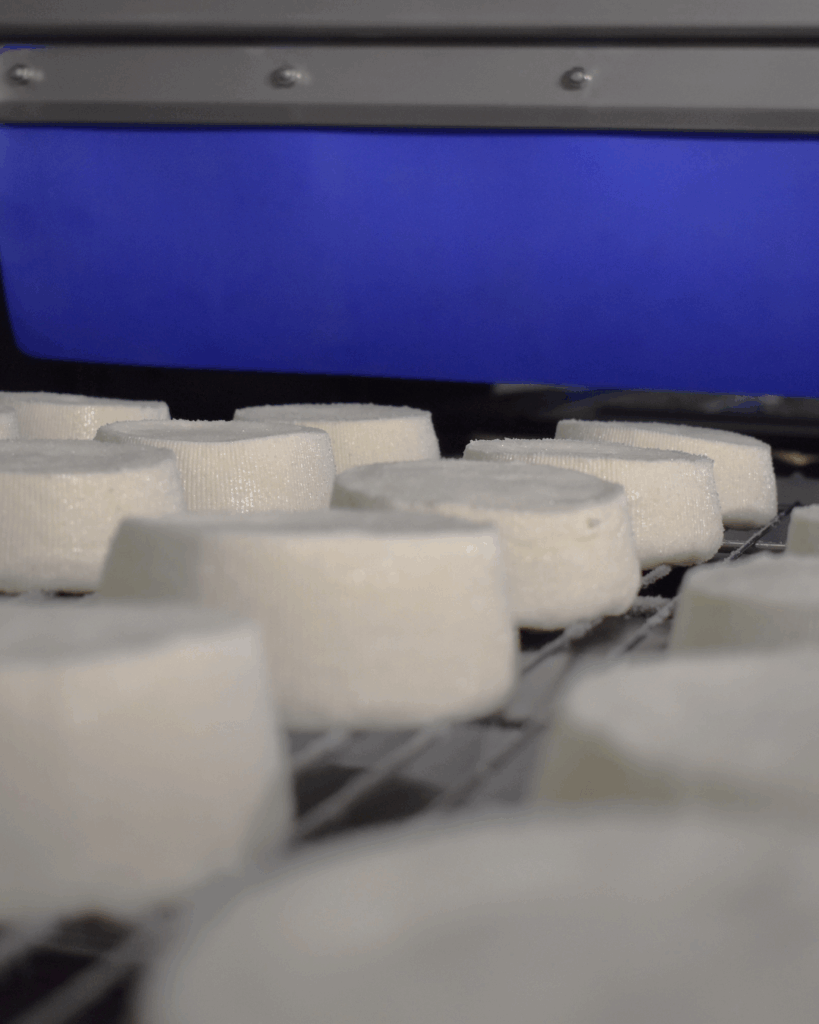
Continuous salting is suitable for different varieties of fresh and soft cheeses, such as:
- Burgos Cheese
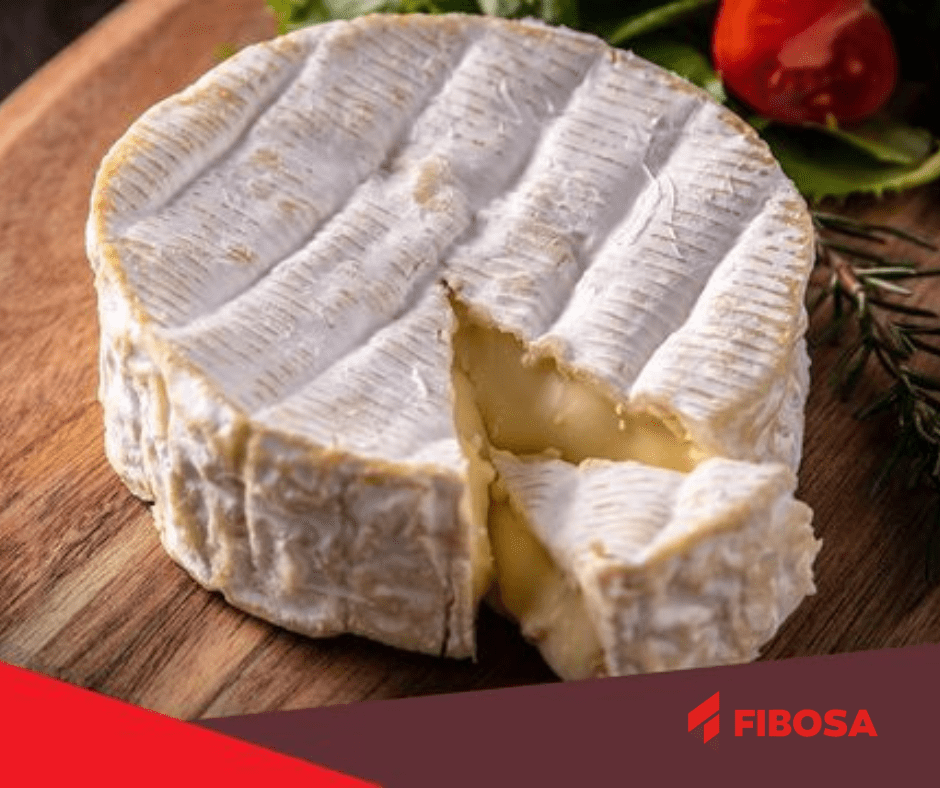
- Brie
- Camembert
In all of them, precise salt control improves flavor and texture, avoids salinity imbalances and prolongs the shelf life of the final product.
A step towards more efficient and sustainable production
In short, the continuous salting process for fresh cheese not only improves cheese quality, but also reduces operating costs and environmental impact. It makes it possible to precisely regulate the amount of salt, maintain optimal hygienic conditions and guarantee a more homogeneous, safe and competitive end product.
Thanks to its technical control and reduced environmental impact, this method has established itself as the reference solution for modern fresh cheese production lines.
At FIBOSA, we design continuous salting solutions that combine efficiency, hygiene and sustainability to adapt to all types of fresh cheeses.
Do you want to know how to optimize your salting process? Contact us for more information.