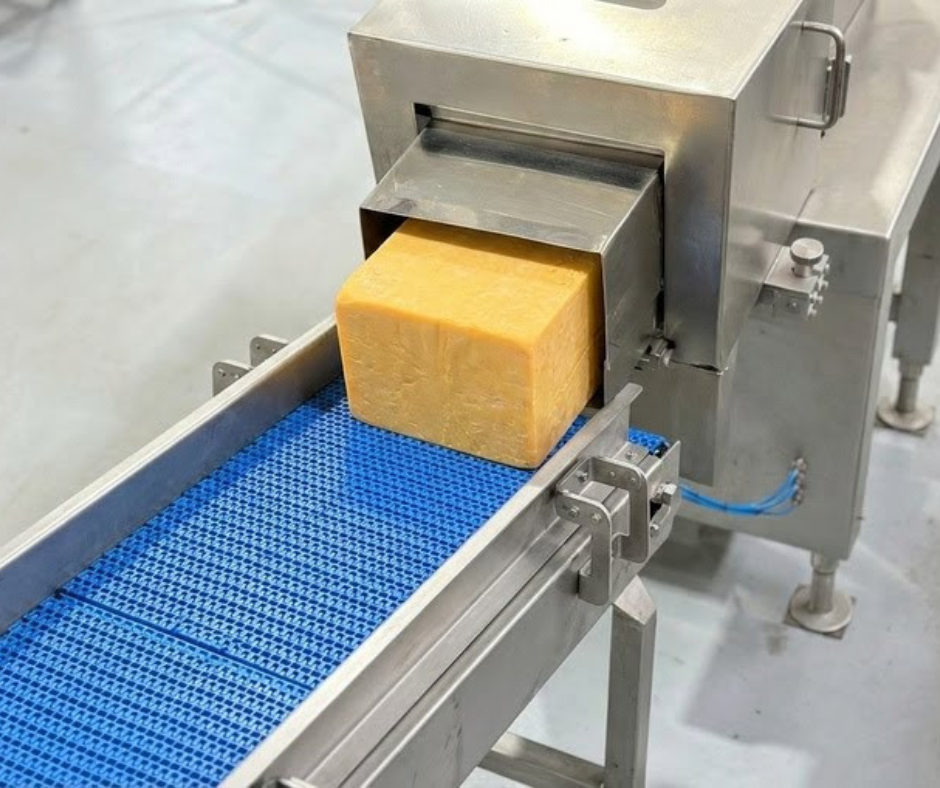
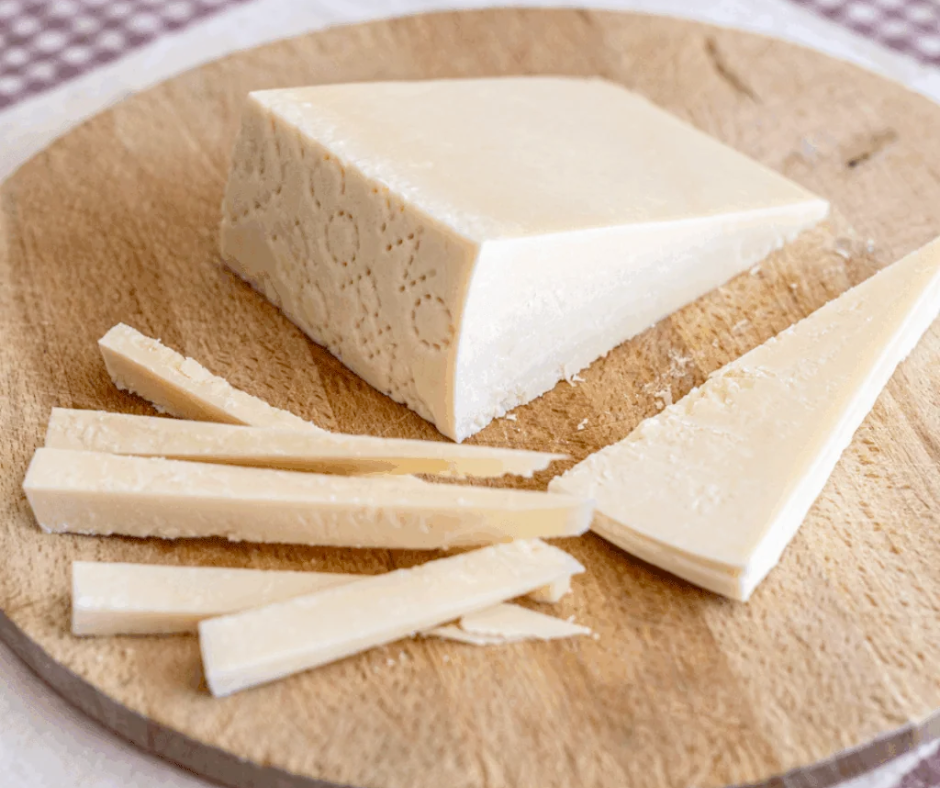
Pecorino Romano, produced in Italy mainly in the regions of Lazio, Sardinia and Tuscany, is an artisan cheese with centuries of history that today is produced with FIBOSA‘s state-of-the-art technology. In this way, quality, safety, yield and hygiene are ensured throughout the manufacturing process. Thus, Fibosa combines tradition with state-of-the-art technical solutions for the dairy industry.
It is a sheep cheese exported all over the world, with a large size, intense flavor and a long cheese ripening process that gives it unique characteristics.
Pecorino Romano manufacturing process with Fibosa technology
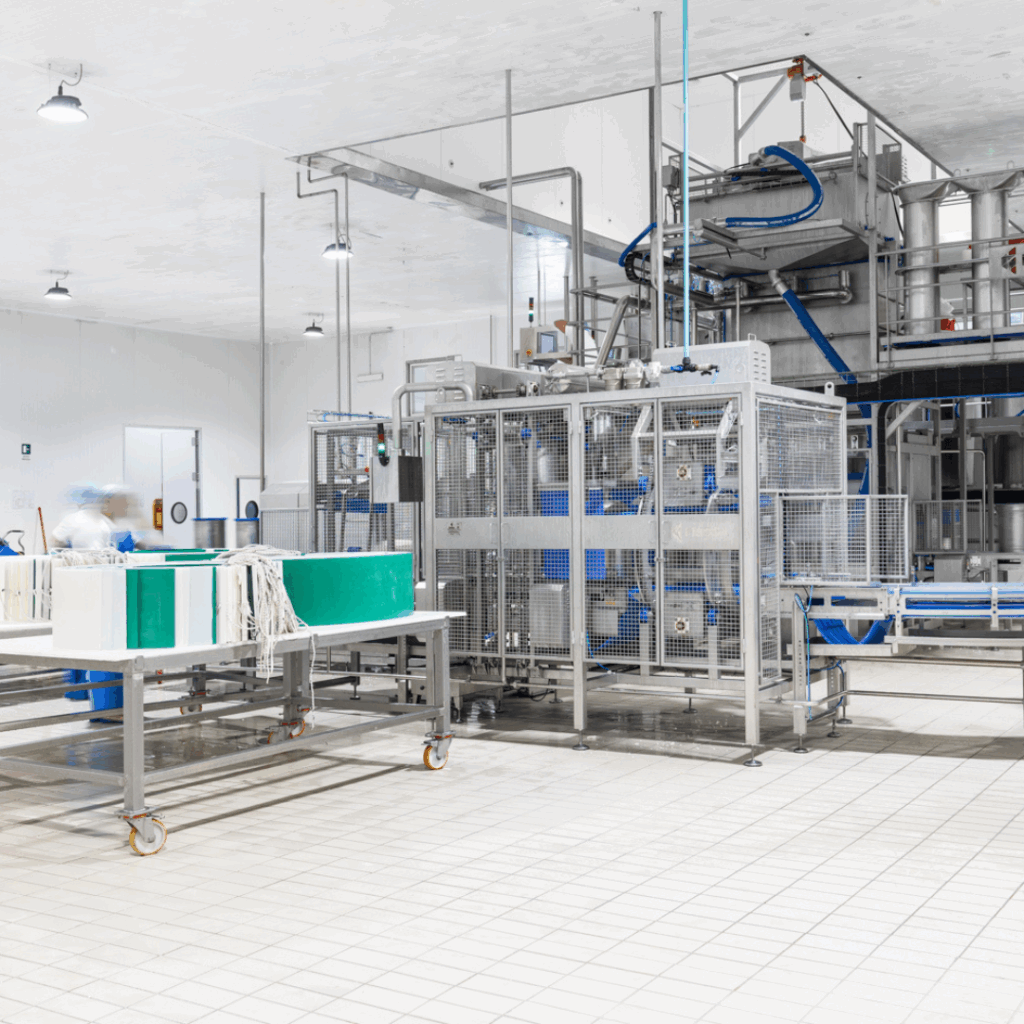
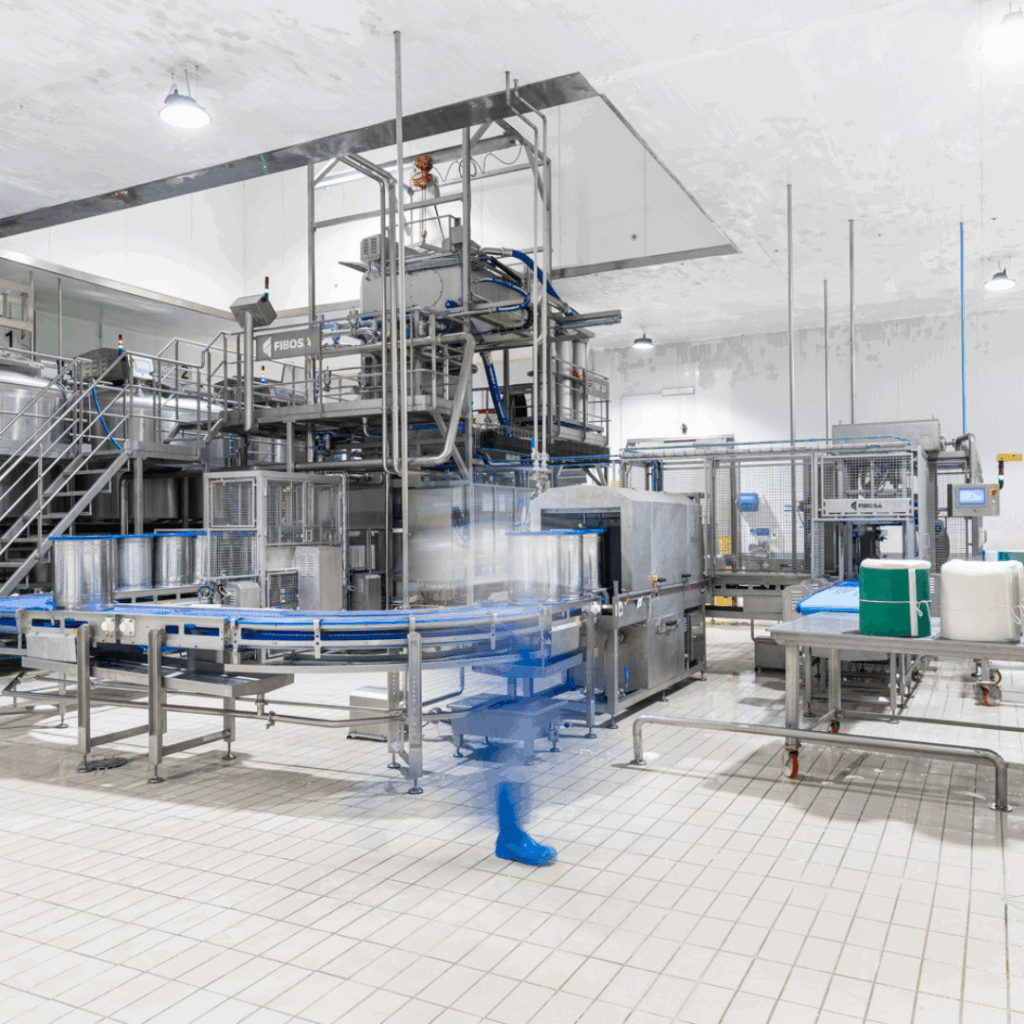
Curdling Cuba
First, the milk is heated to coagulation temperature and the rennet is added. When the curd reaches the right consistency, cutting begins.
Agitation and cutting determine the grain size and, consequently, the yield, drainage and final texture of the cheese.
In addition, the progressive and homogeneous cutting ensures that there is no excessive breakage or loss of nutrients, a key step in the cheese making process.
Drainage and delivery to the dosing machine
The whey is then partially extracted from the curd and the mass is conveyed to the dosing machine.
Controlled whey drainage ensures that no textural defects appear and that the curd reaches the molds at the optimum moisture content, thus ensuring a higher quality of the final product.
Mold washing and molding
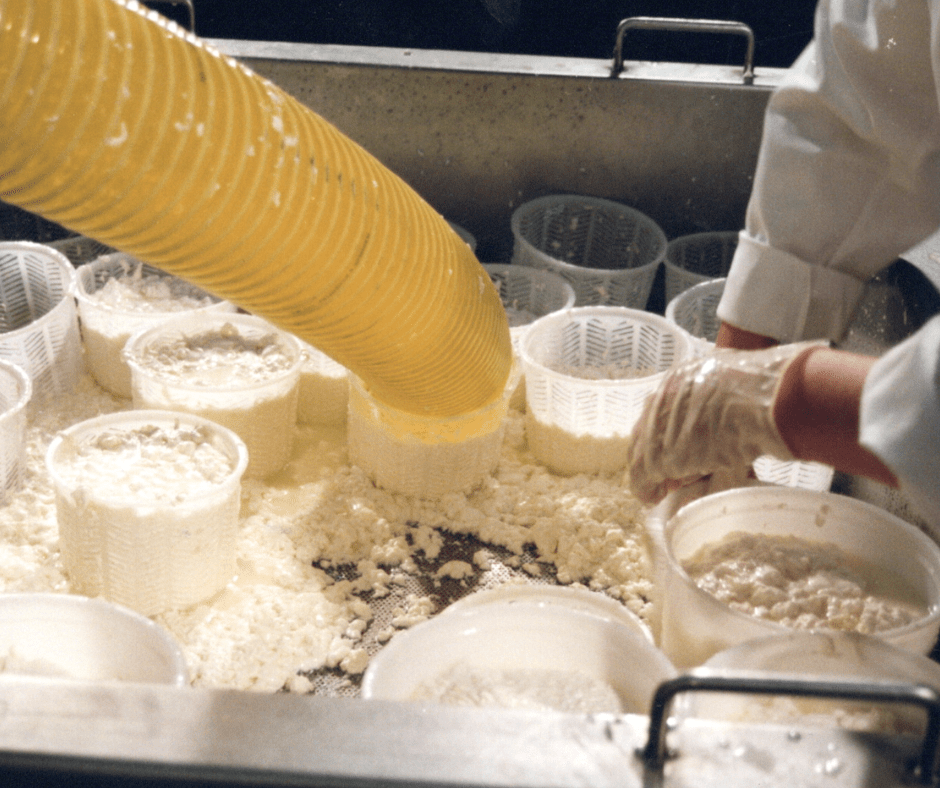
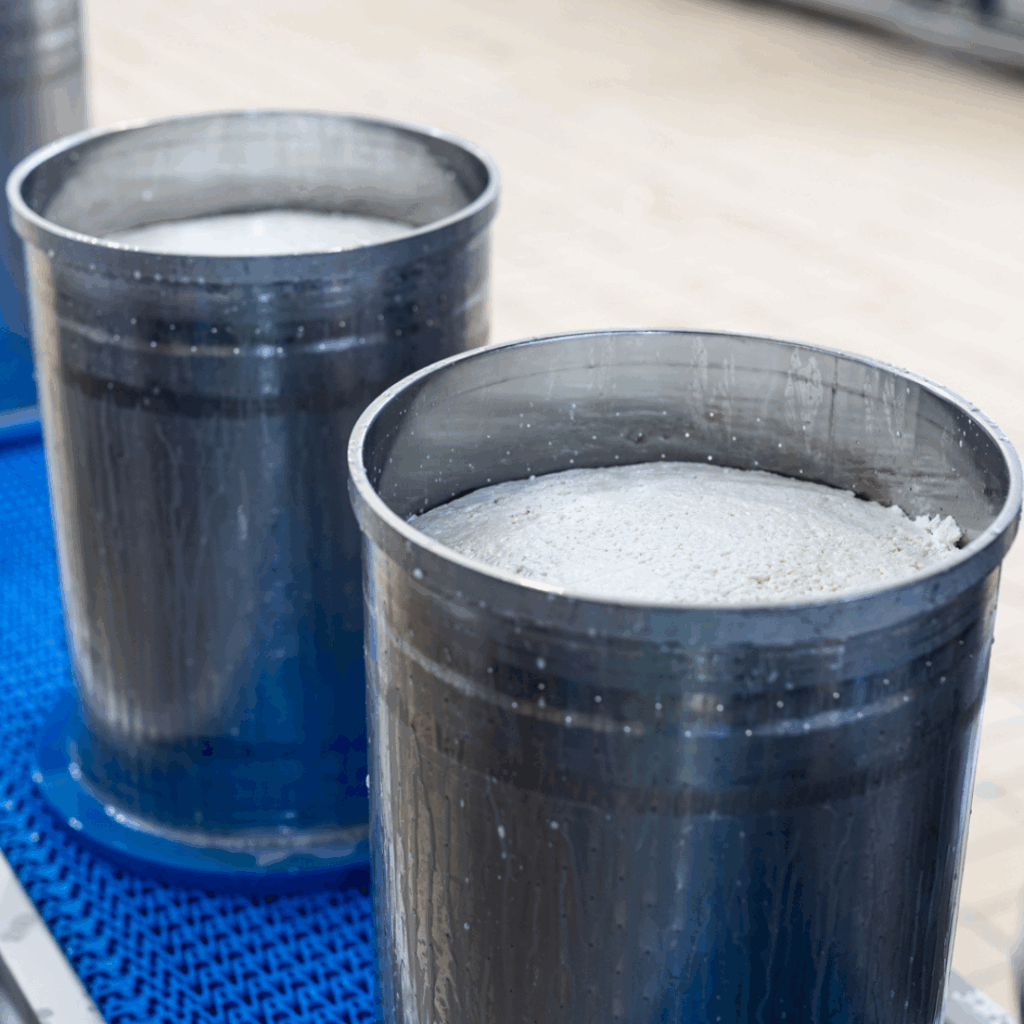
The plastic or stainless steel molds are then washed in Fibosa’s mold washing tunnel. They are then transferred to the dosing machine, which fills each mold with the dosed and preformed curd.
Automatic mold washing ensures hygiene and reuse of molds, while uniform dosing ensures better regularity of weight and shape, essential aspects in any cheese machinery line.
Mold turning
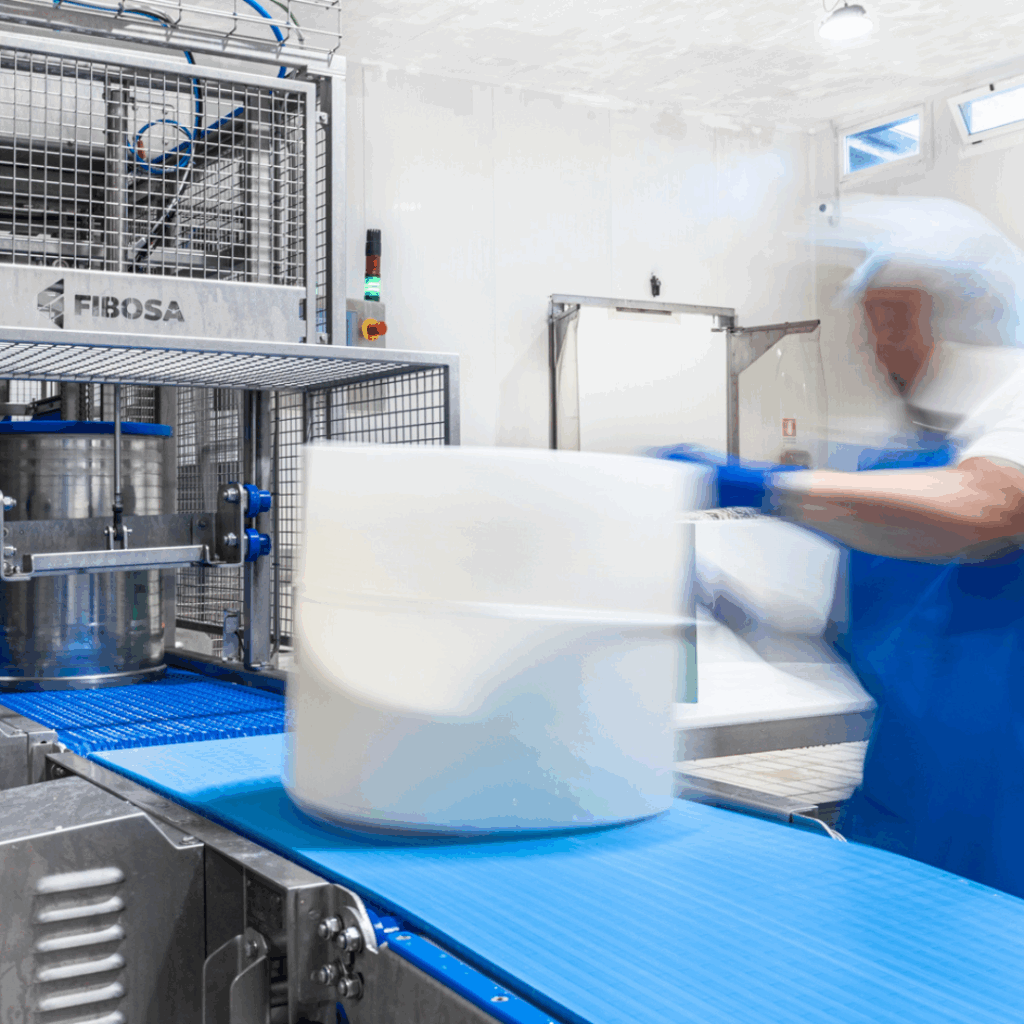
Subsequently, the molds are turned with the Fibosa mold turner. With each turning, the cheese continues to expel whey.
This uniform turning promotes symmetrical drainage, avoids deformation and ensures optimum internal baking of the dough.
Demolding and positioning of the belt
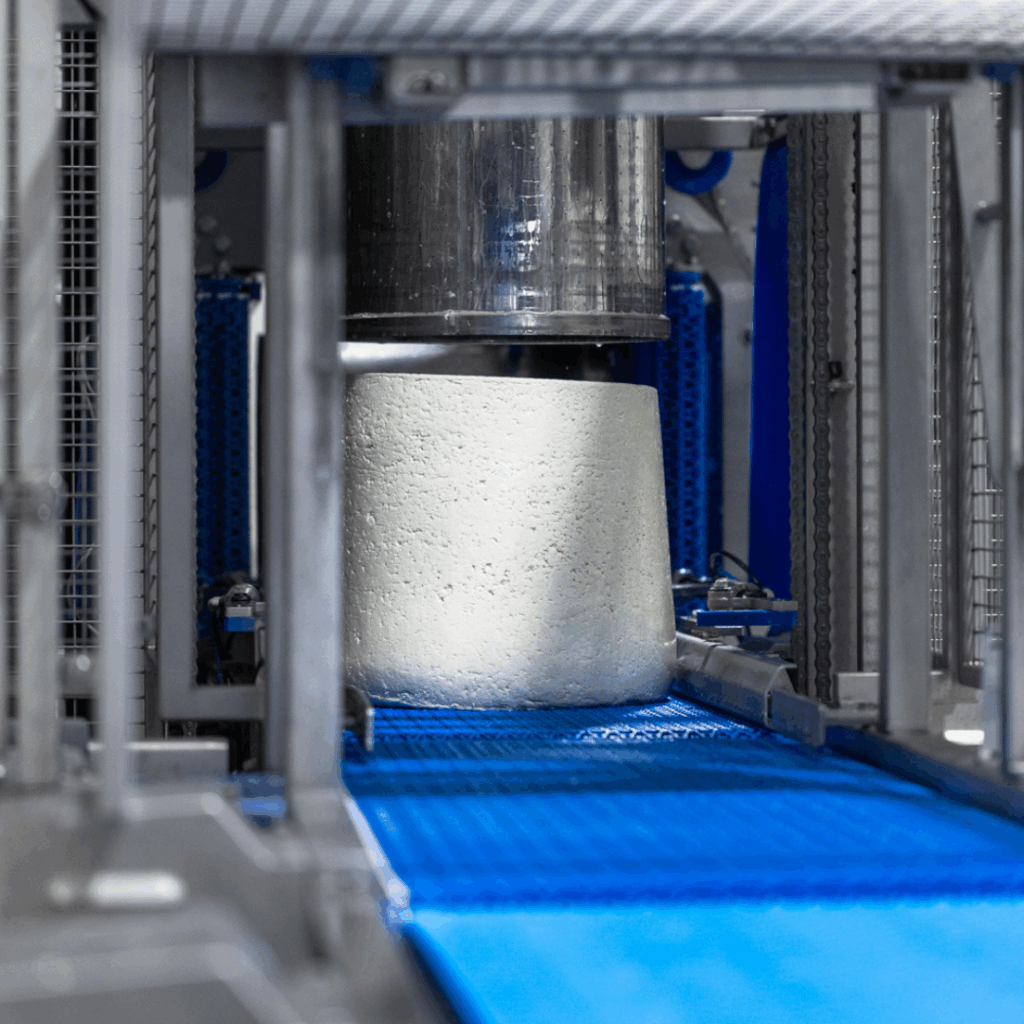
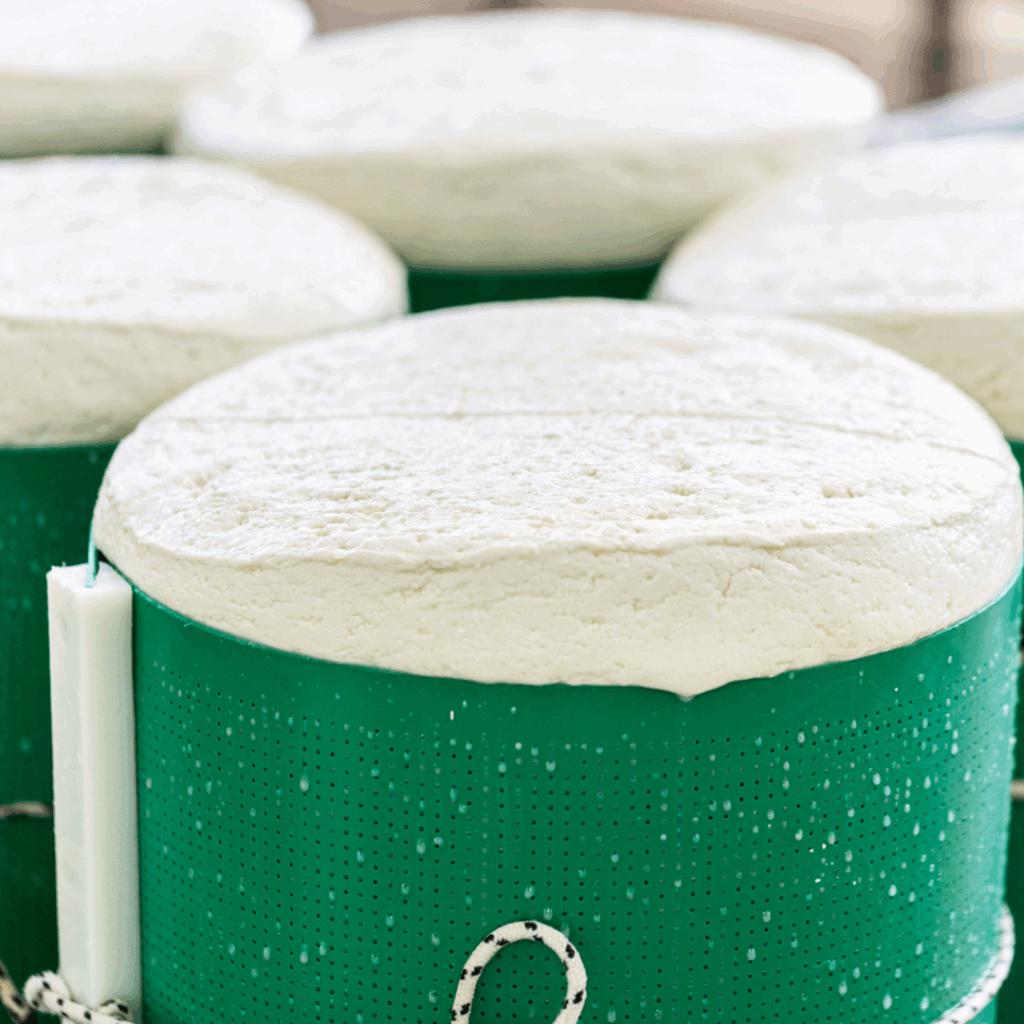
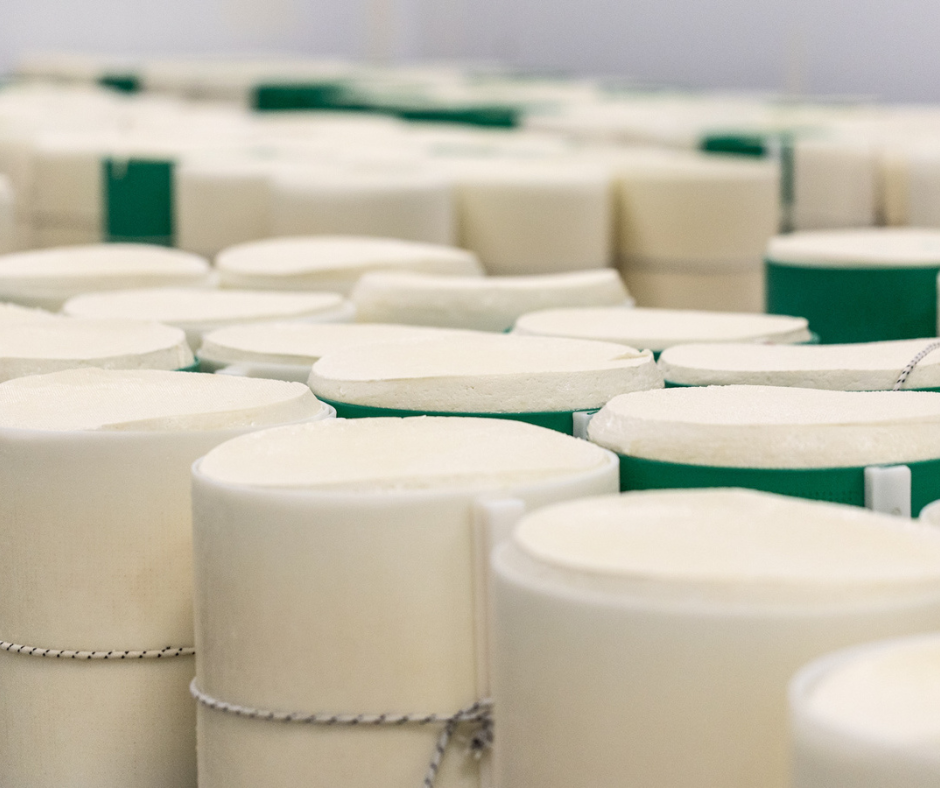
At the end of the turning cycle, the piece is demolded and a belt is manually placed on it to tighten the cheese and remove residual moisture.
The belt ensures the consolidation of the cylindrical shape, the uniformity of the crust and the stability of the garment before the final phase.
Maturation
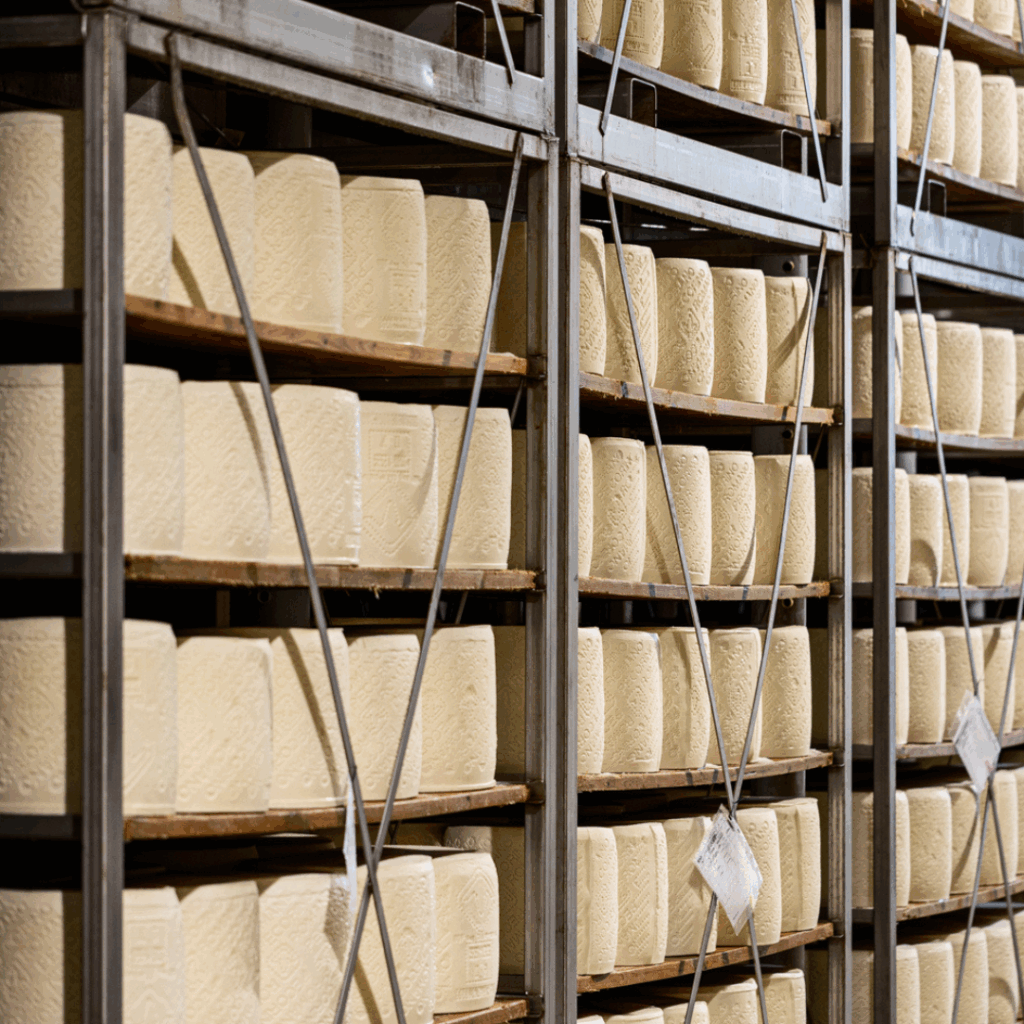
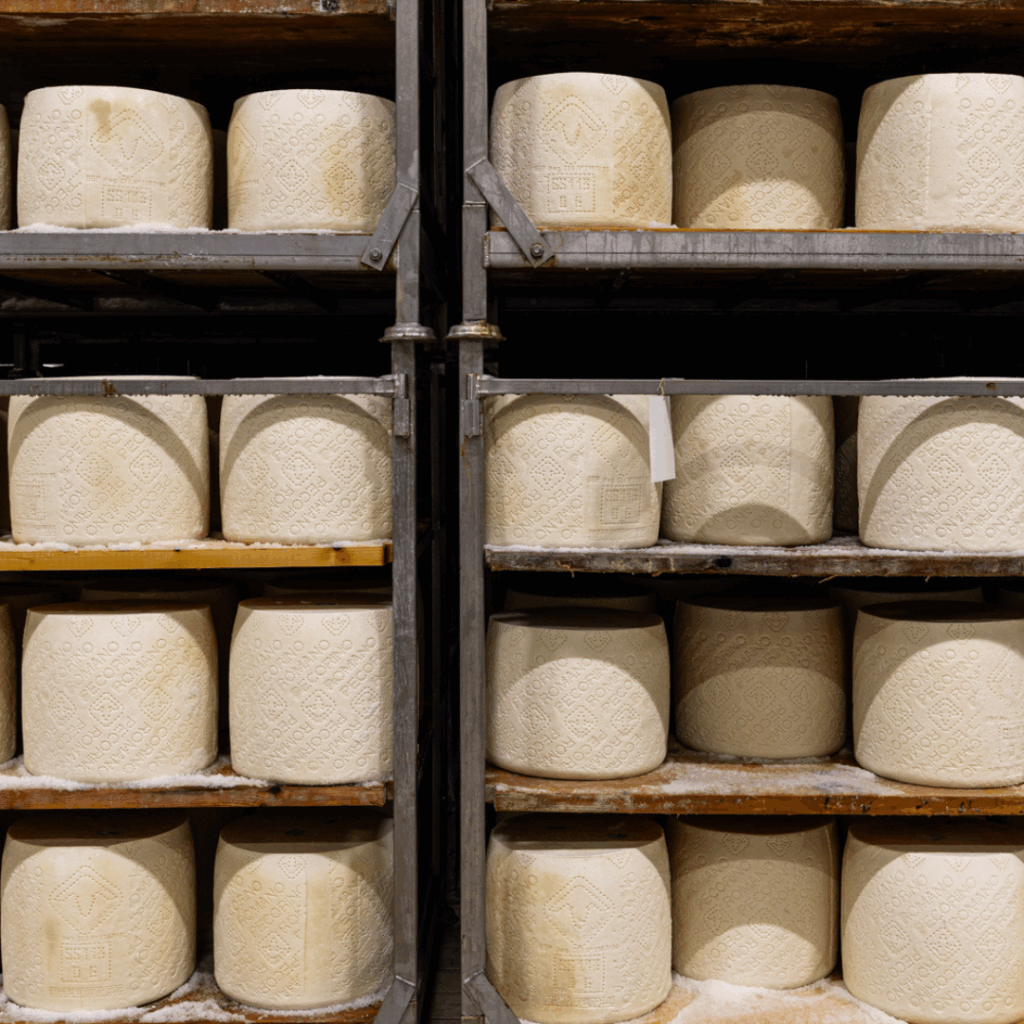
Finally, the pieces are placed in the cheese ripening room, where, over the course of months, Pecorino Romano develops its characteristic flavor, aroma and texture.
The control of temperature, humidity and ventilation ensures uniform ripening, avoids alterations of the rind and offers a final product of the highest quality for the international market.
Learn about the manufacturing process in video
If you want to see how this manufacturing process works, Fibosa has released a video showing how its technology ensures the tradition and quality of Pecorino Romano. From washing to ripening, each phase integrates technological innovation with the authenticity of traditional methods, ensuring that the result is faithful to the essence of one of Italy’s most iconic cheeses.
Watch the video here: https://www.youtube.com/watch?v=TvaCZWrzeQM